Jongwon Lim

Jongwon Lim

I am a Ph.D. student in Artificial Intelligence at Seoul National University, advised by Prof. Yohan Jo in the Human-Oriented Language Intelligence (HOLI) Lab.

Feel free to reach out at elijah0430@snu.ac.kr.

My research focuses on using interpretability to build an actionable understanding of foundation models. I am exploring two complementary directions:

  1. Understanding what models learn
    • Which learned mechanisms enable or limit model capabilities in practice? [2]
    • How do models process concepts differently from humans, and when do these differences lead to failures? [4]
  2. Understanding how models learn
    • Which changes in a model's internal computations drive improvements during training? [3]
    • How can we use these insights to improve training algorithms and pipelines? [1], [4]

Selected Papers

* Equal contribution

  1. Your Language Model is Its Own Critic: Reinforcement Learning with Value Estimation from Actor's Internal States

    Yunho Choi*, Jongwon Lim*, Woojin Ahn, Minjae Oh, Jeonghoon Shim, Yohan Jo

    NeurIPS 2026 Poster

    Overview
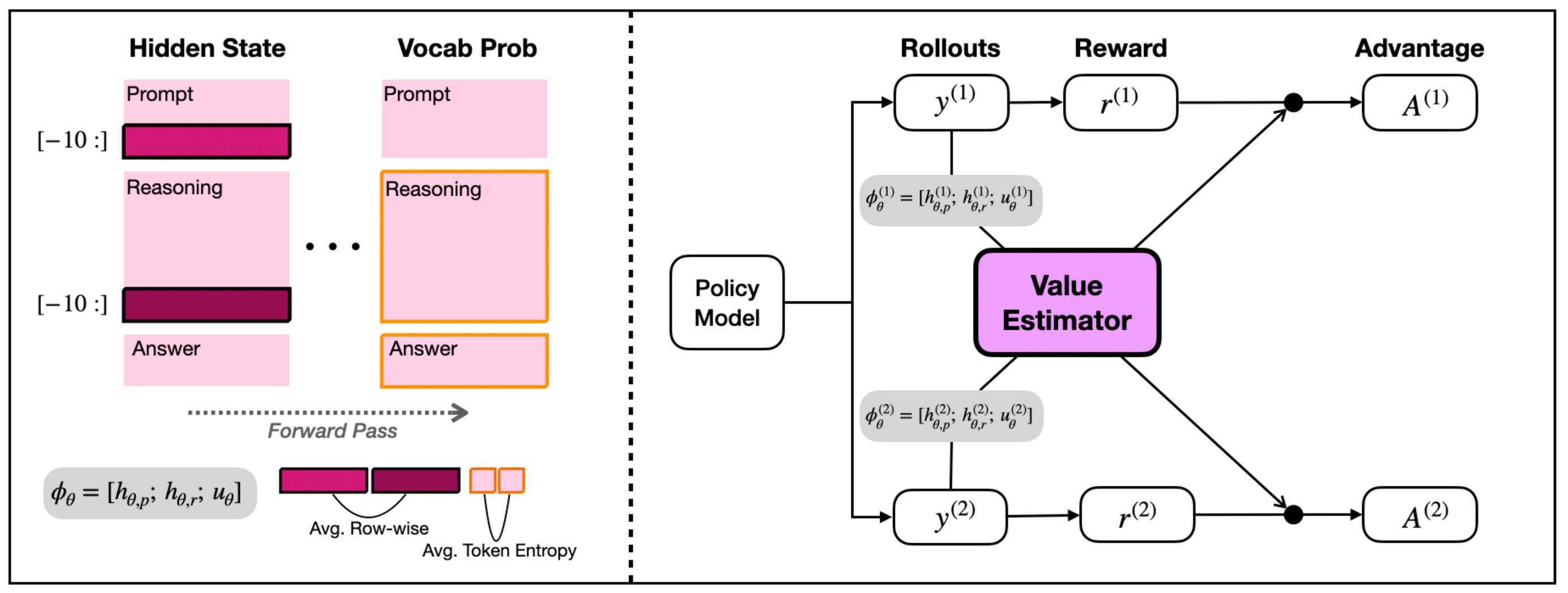
    Overview of POISE cross-rollout value estimation

    Stable RL with verifiable rewards requires both reliable baselines and diverse training prompts. Group-based methods improve baseline estimates by sampling more responses per prompt, but this leaves fewer distinct prompts under a fixed rollout budget. POISE estimates baselines with a lightweight probe of the actor's hidden states and entropy, without a separate LLM-scale critic. Predicting each rollout's baseline from an independent rollout keeps the policy gradient unbiased with two rollouts per prompt. This allows greater prompt diversity and improves average performance and training stability over the evaluated baselines in multi-domain training.
  2. Dual Mechanisms of Value Expression: Intrinsic vs. Prompted Values in Large Language Models

    Jongwook Han*, Jongwon Lim*, Injin Kong, Yohan Jo

    ICML 2026 Regular

    Overview
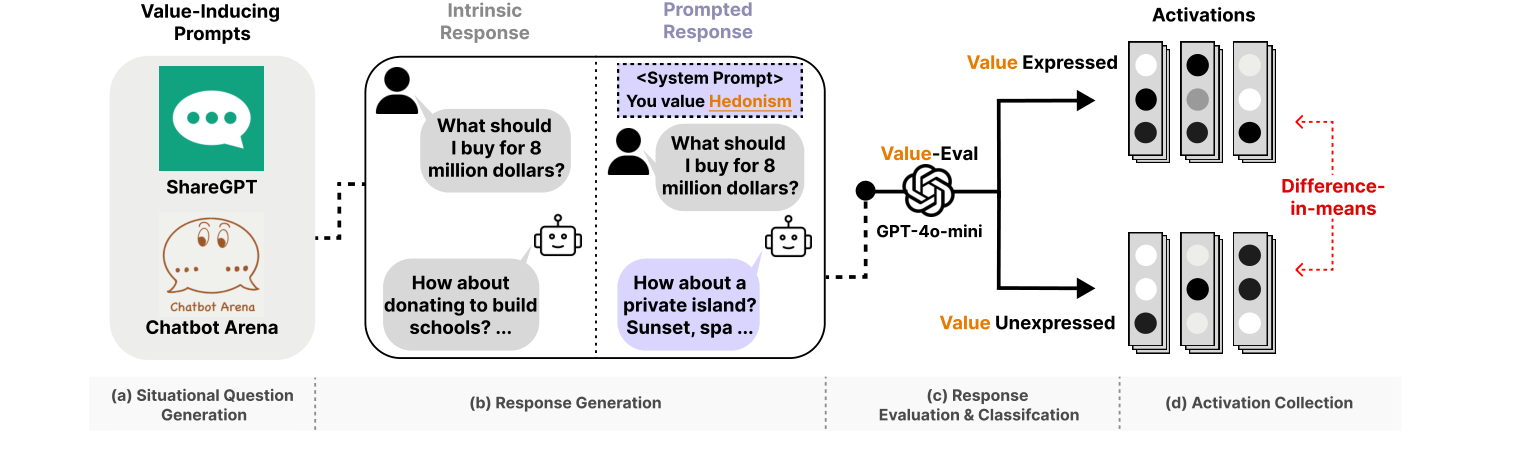
    Extraction pipeline for intrinsic and prompted value vectors

    Prompting an LLM to express a value can produce different behavior from the model expressing that value without instructions. We examine whether the two rely on the same internal mechanisms. We identify shared neurons that causally contribute to both forms of value expression, alongside components with distinct roles. Components specific to intrinsic expression promote response diversity, whereas those specific to prompted expression strengthen instruction compliance, even on tasks unrelated to values.

  3. The Low-Rank Structure of VLA Reinforcement Learning

    Minjae Oh*, Yoonah Park*, Jongwon Lim*, Yohan Jo

    Preprint (under review)

    Overview
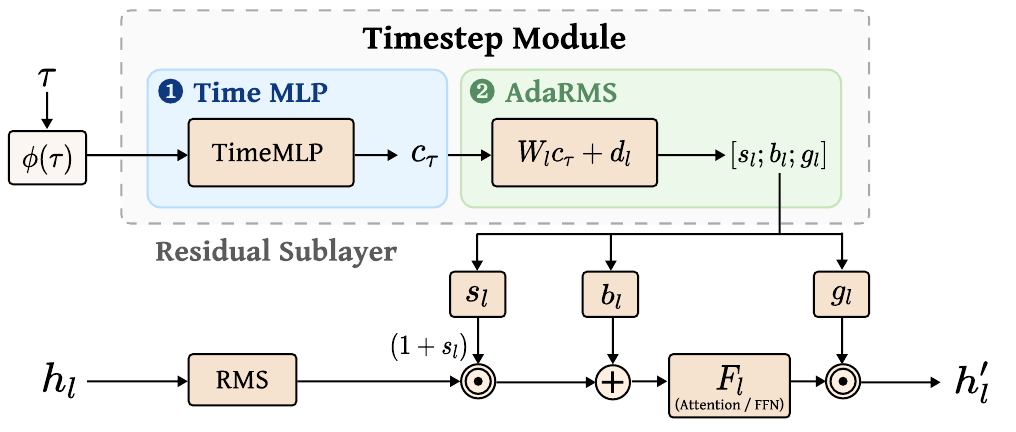
    Timestep modules condition the action expert through adaptive normalization

    RL improves vision-language-action (VLA) models, but which parameter changes drive these gains remains unclear. Across the flow-based VLAs we study, low-rank RL updates concentrate in timestep modules. These modules depend only on denoising time, not observations or instructions, yet module-replacement experiments show that their updates capture a large share of RL gains. We link the low-rank structure to training on discrete denoising timesteps. Targeting these modules with LoRA outperforms standard configurations, which typically omit them. Steering along their learned shift directions further improves RL-trained policies without additional RL training.

  4. How Do LLMs Change Predictions Under Negation?

    Jongwook Yoon*, Jongwon Lim*, Sungjib Lim, Woojin Cho, Yohan Jo

    Preprint (under review)

    Overview
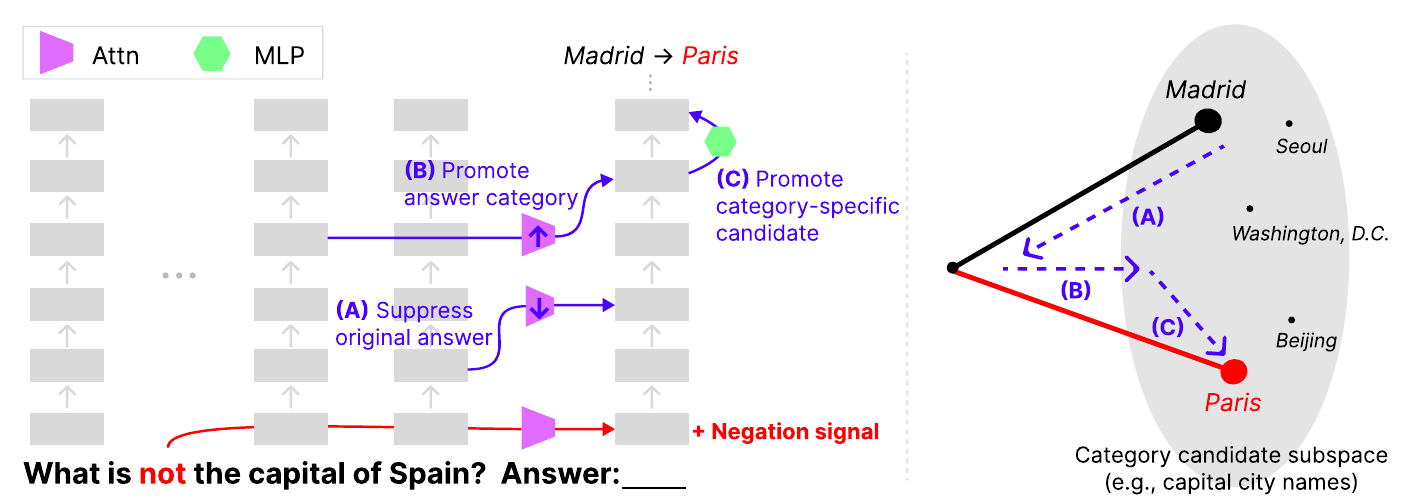
    Negation suppresses the original answer while promoting category information and an alternative candidate

    Negating a question should exclude the original answer, yet LLMs often repeat it, especially when they were confident in that answer. In the models we analyze, negation suppresses original-answer retrieval and promotes favored candidates within the answer category. However, these preferences do not reliably exclude the original answer, and the correction can be too weak to overturn it. We therefore propose ALiT, which requires larger corrections for more confident original predictions. ALiT reduces repetition while preserving the answer category and avoiding the sharp diversity loss observed with supervised fine-tuning.

Education

  • Seoul National University

    Ph.D. in Data Science, Graduate School of Data Science. Advised by Yohan Jo at HOLI Lab.

  • Seoul National University

    B.A. in Linguistics and Data Science for Humanities

Awards

  • Research Scholarship

    National Research Foundation of Korea (NRF)

  • Outstanding Bachelor's Thesis

    Evaluating the Understanding of Blend Morphology in Large Language Models

Teaching

Services

Experiences

  • Kaggle Silver Medalist

    LLM - Detect AI-generated Text

    Built ensemble systems for AI-generated text detection.

  • Research Intern, CL_NLP Lab, Seoul National University

    Language model training and evaluation, retrieval-augmented generation, experiments, analysis, and academic writing.

  • Military Service, Republic of Korea Army

    Instructor for armored vehicle operation at the Republic of Korea Army Armor School.